
Rust Remover for Gas Tanks
You can use this widget to input arbitrary HTML code into the page. Invalid HTML code may cause issues with the preview pane.
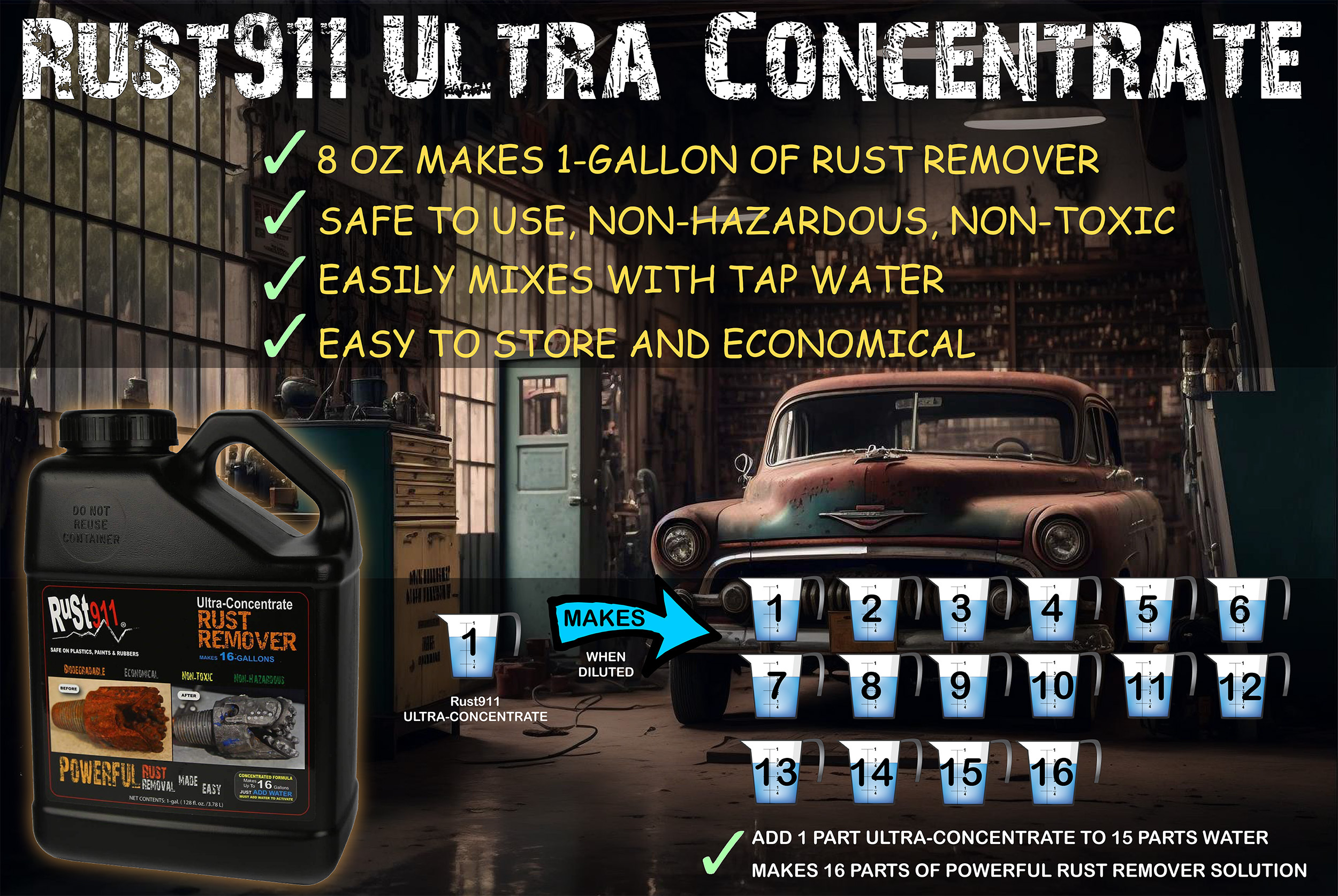
Best Rust Remover for Gas Tanks: Safe Internal Tank Rust Removal with Rust911
Rust inside a motorcycle, tractor, automotive, marine, or small engine gas tank can cause clogged filters, damaged carburetors, fuel pump problems, poor engine performance, and recurring contamination in the fuel system. Rust911 Rust Remover is an excellent choice for gas tank rust removal because it is a powerful, acid-free, non-toxic, biodegradable, and metal-safe rust remover designed to dissolve iron oxide without aggressively attacking the base metal.
Unlike harsh acid-based tank cleaners, Rust911 uses a chelation-based process that targets rust and corrosion while helping preserve sound steel. This makes it ideal for cleaning the inside of rusty gas tanks, fuel tanks, motorcycle tanks, tractor tanks, generator tanks, vintage car tanks, small engine tanks, and restoration projects.
SEO Keywords: gas tank rust remover, rust remover for gas tanks, motorcycle tank rust remover, fuel tank rust remover, remove rust from gas tank, best rust remover for metal, acid-free rust remover, non-toxic rust remover, rust remover for fuel tanks, tank rust cleaning solution.
Why Use Rust911 for Gas Tank Rust Removal?
- Acid-free formula: safer than muriatic acid, phosphoric acid, or vinegar-based methods.
- Selective rust removal: targets iron oxide while helping preserve the base metal.
- Concentrated value: Rust911 Ultra Concentrate can be diluted to make a large volume of working solution.
- Safe on most sound metals: ideal for steel gas tanks and restoration work.
- Non-toxic and biodegradable: safer for users, shops, garages, and the environment.
- Reusable solution: the working solution can often be reused until it becomes spent and dark/black.
- Excellent for internal tank cleaning: reaches seams, corners, and hidden rust inside the tank.
Recommended Gas Tank Rust Removal Procedure
Important Safety Notice: Always remove all gasoline and fumes before cleaning a fuel tank. Work in a well-ventilated area away from sparks, flames, heaters, pilot lights, or ignition sources. Dispose of old fuel and contaminated rinse water according to local regulations.
Step 1: Remove the Gas Tank
- Disconnect the fuel line, petcock, sending unit, fuel pump, and any electrical components if applicable.
- Remove the tank from the vehicle, motorcycle, tractor, generator, or equipment.
- Remove the fuel cap and drain all old gasoline into an approved fuel container.
Step 2: Degrease the Inside of the Tank
Rust removers work best when the metal surface is free of gasoline residue, varnish, oil, grease, and sludge. Before using Rust911, clean the inside of the gas tank with a suitable degreaser or detergent cleaner.
- Add warm water and a strong degreasing detergent to the tank.
- Shake, rotate, and slosh the tank thoroughly to loosen fuel varnish and oily residue.
- Drain the tank completely.
- Rinse several times with clean water until the rinse water is mostly clear.
Step 3: Remove Loose Rust and Scale
If the tank has heavy rust flakes or scale, remove loose material before chemical rust removal.
- Add a small length of chain, clean nuts and bolts, or non-sharp tumbling media into the tank.
- Shake and rotate the tank to knock loose rust from the internal surfaces.
- Drain and flush out all loose debris.
- Repeat until large rust flakes are removed.
Step 4: Mix Rust911 Rust Remover Solution
Mix Rust911 according to the label directions. For Rust911 Ultra Concentrate, dilute with water to create the working rust-removal solution. Use enough solution to completely cover the rusty internal surfaces.
Tip: For best results, fill the tank completely with Rust911 working solution. If the tank cannot be filled completely, rotate it periodically so every internal surface remains in contact with the solution.
Step 5: Soak the Tank
- Seal all openings securely using fuel-safe plugs, rubber stoppers, caps, or temporary covers.
- Fill the tank with Rust911 working solution.
- Allow the tank to soak until rust is dissolved.
- Light rust may clean quickly; heavy rust may require a longer soak.
- Rotate or reposition the tank occasionally if the tank is not completely full.
Step 6: Inspect the Inside of the Tank
After soaking, drain some solution and inspect the tank using a flashlight or inspection camera. If rust remains, continue soaking or repeat the treatment with fresh working solution.
Step 7: Drain and Rinse Thoroughly
- Drain the Rust911 solution into a clean container if you plan to reuse it.
- Rinse the tank thoroughly with clean water.
- Flush seams, corners, baffles, and low spots until residue is removed.
Step 8: Dry the Tank Immediately
Bare clean steel can flash-rust quickly after rinsing. Dry the tank immediately after cleaning.
- Drain all water completely.
- Use compressed air, a blower, or warm forced air to dry the inside of the tank.
- Rotate the tank while drying to remove trapped water from seams and corners.
- Once dry, add fuel, light oil, fogging oil, or an appropriate tank sealer if desired.
Gas Tank Cleaning Procedure Summary
| Step | Action | Purpose |
|---|---|---|
| 1 | Drain all fuel | Removes gasoline and reduces fire risk |
| 2 | Degrease tank | Removes varnish, oil, and fuel residue |
| 3 | Knock out loose rust | Improves chemical contact with rusted metal |
| 4 | Add Rust911 solution | Dissolves internal rust safely |
| 5 | Soak and rotate | Ensures full internal surface coverage |
| 6 | Rinse thoroughly | Removes spent solution and loosened residue |
| 7 | Dry immediately | Prevents flash rust after cleaning |
When Should You Use Rust911 in a Gas Tank?
Rust911 is ideal when a gas tank has visible internal rust, orange/brown corrosion, rusty fuel, clogged filters, rust flakes, or contamination that keeps returning after fuel system service. It is especially useful for restoring tanks from motorcycles, classic cars, tractors, ATVs, generators, lawn equipment, marine tanks, and vintage machinery.
What to Do After Removing Rust from a Gas Tank
- Dry the tank completely to prevent flash rust.
- Install a new fuel filter before putting the tank back into service.
- Inspect or replace old fuel lines if rust contamination was severe.
- Clean the carburetor, petcock, fuel pump, or injectors if rust entered the fuel system.
- Keep the tank full during storage to reduce condensation.
- Use fresh fuel and proper storage practices to reduce future corrosion.
Rust911 vs Acid-Based Gas Tank Rust Removal
| Feature | Rust911 Rust Remover | Acid-Based Cleaners |
|---|---|---|
| Rust Removal Method | Chelation-based rust removal | Acid attack / surface etching |
| Effect on Base Metal | Designed to target rust while preserving sound metal | Can etch or attack metal if misused |
| User Safety | Non-toxic, acid-free, biodegradable | Often corrosive and hazardous |
| Ease of Use | Soak, rinse, and dry | May require neutralizing and careful handling |
| Best Use | Gas tanks, tools, parts, restoration projects | Aggressive stripping when hazards are acceptable |
Frequently Asked Questions About Gas Tank Rust Removal
Can Rust911 be used inside motorcycle gas tanks?
Yes. Rust911 is well suited for motorcycle gas tank rust removal because it can reach internal tank surfaces, seams, and corners when the tank is filled or rotated during soaking.
Does the tank need to be degreased first?
Yes. Gasoline residue, varnish, oil, and sludge can block contact between the rust remover and the rust. Degreasing first improves performance.
Will clean metal flash rust after rinsing?
Yes, clean bare steel may flash-rust after water rinsing. Dry the tank immediately and protect the surface with fuel, light oil, fogging oil, or a compatible tank coating if needed.
Can the Rust911 solution be reused?
In many cases, yes. The working solution can often be reused until it becomes spent, heavily loaded with iron, and dark/black in appearance.
Is Rust911 safer than muriatic acid for fuel tanks?
Rust911 is acid-free and avoids the aggressive metal attack, fumes, and handling hazards commonly associated with strong acid cleaners.
Restore rusty fuel tanks the safer way with Rust911 — a powerful, concentrated, acid-free rust remover for gas tanks, tools, auto parts, motorcycle tanks, tractors, and restoration projects.
Visit Rust911.com to learn more.